Check valves play a vital role in ensuring the continuous operation of pumps, maintaining pressure within vessels, and minimizing material loss in the event of a pipeline rupture or damage. They are found everywhere—from large-diameter industrial piping to the intricate, miniature plumbing systems used in precision equipment.
If you are unfamiliar with check valves, this article will provide a detailed overview. We will explore what they are, why they are necessary, and the unique advantages they offer, helping you gain a solid understanding of this essential component.
What Is a Check Valve?
A check valve is a critical mechanical device designed to allow fluid to flow in one direction while automatically preventing backflow (reverse flow) within a piping system.
The operating principle is straightforward: as fluid moves in the intended (forward) direction, its pressure overcomes forces such as spring tension or gravity, pushing the valve’s closing element—whether it be a disc, ball, or diaphragm—into the open position.
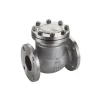
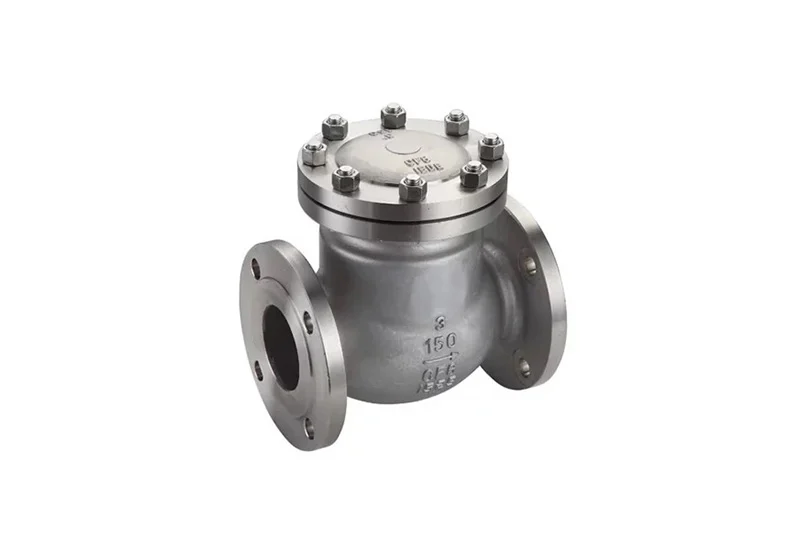
The specific opening mechanism varies by valve type. For instance, a swing check valve utilizes a hinged disc that opens by swinging, while a lift check valve employs a piston-like disc that opens through vertical movement.
When forward flow ceases or reverses, the closing element automatically returns to its closed position—driven by spring tension, gravity, or the pressure of the backflowing fluid—to create a reliable seal that stops reverse flow. This entire process occurs without the need for manual intervention or external control, making the check valve a fully automatic flow-control device.
Different types of check valves exhibit significant variations in their “opening pressure”—the minimum upstream pressure required to actuate the valve—as well as their specific closing characteristics. For example, a wafer-style check valve might open at as little as 0.5 psi, whereas a heavy-duty nozzle-type check valve could require 5–10 psi to open.
Why Are Check Valves Necessary?
At their core, check valves serve to protect vital power equipment, such as pumps. They act as a primary line of defense against the destructive forces of “water hammer” (pressure surges), while simultaneously enhancing the overall stability and energy efficiency of a system. When a water pump shuts down abruptly—whether due to a power outage or a mechanical failure—the medium (fluid) that had been transported to a higher elevation or a high-pressure zone will, driven by gravity and residual pressure, surge backward at high speed.
A check valve automatically closes the flow passage the instant this backflow begins. Without the cushioning effect of a check valve, the returning fluid would collide violently with the forward-moving inertial flow, generating a pressure surge (shock wave) that can reach several to ten times the normal operating pressure. This shock wave then oscillates back and forth through the pipeline at the speed of sound.
Such an event can easily cause irreversible equipment damage, including the twisting of pump shafts, the rupture of mechanical seals, or the overloading and burnout of motors. In severe cases, it can trigger “water hammer” phenomena, posing a significant risk to personnel safety.
Furthermore, a check valve retains static pressure within the piping network after the pump stops, preventing the system from draining completely. This eliminates the need to refill the entire pipeline upon the next startup, thereby reducing the risks of dry running and cavitation, while also significantly lowering energy consumption during startup. In systems featuring multiple pumps in parallel or complex multi-branch distribution, check valves serve to isolate different pressure zones, preventing high-pressure fluid from surging into low-pressure lines. This avoids cross-contamination between different pipelines and ensures the purity of materials within the process flow.
Unique Advantages of Check Valves
Fully Autonomous Protection
These valves require no external power, electronic controls, or manual intervention; the opening and closing of the valve disc are driven entirely by the pressure of the fluid itself.
Inherent Water Hammer Suppression
Their structural design—particularly in the case of “slow-closing” check valves—naturally provides a cushioning effect against water hammer.
High Reliability and Long Service Life
With no complex transmission mechanisms, actuators, or packing glands, and very few moving parts, the risk of the valve jamming or suffering mechanical failure is virtually non-existent.
Exceptional Versatility
Through adjustments to their structure and materials, check valves can be adapted to suit almost any fluid-handling application. Energy efficiency gains through low flow resistance: Common swing-type and butterfly-type check valves feature a streamlined bore design. When fully open, the valve disc offers virtually no obstruction to the flow path, ensuring minimal resistance to the fluid and preventing any significant additional pressure loss within the system.
Lightweight and compact installation advantages
These check valves are only one-third to one-half the size and weight of standard gate valves of the same nominal diameter. With flange connections that fully comply with industrial standards, they can be integrated directly into existing piping systems without the need for any structural modifications to the pipeline.
If you are looking for a suitable check valve, Yifa would be an excellent partner for you.