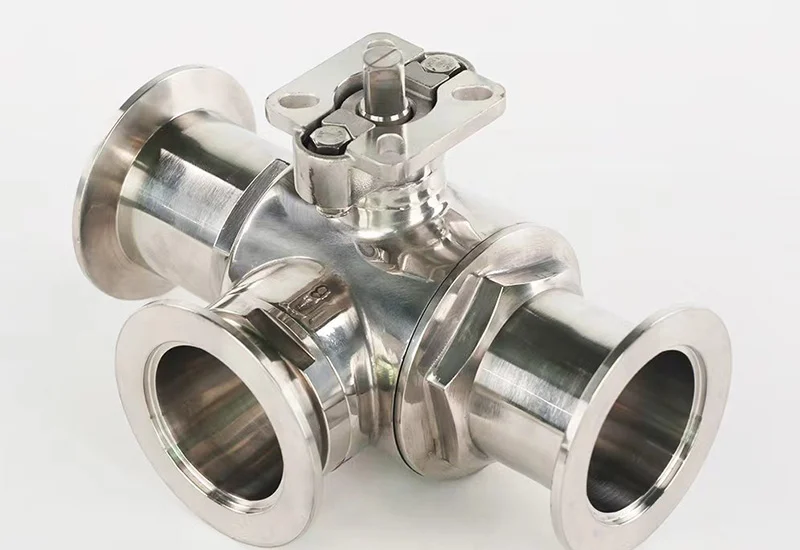
The liquid cooling industry (especially data center cold plate and CDU loops) has core requirements for valves centered on clean materials, corrosion resistance, low flow resistance, and leak prevention. Stainless steel (SUS304/316L) is generally required, and connection methods tend toward welding, clamp, or quick-connect to avoid blockage and contamination caused by PTFE tape or thread sealant.
Based on these requirements, the following categories of your stainless steel valves are highly matched to the liquid cooling industry:
Core Matching Categories
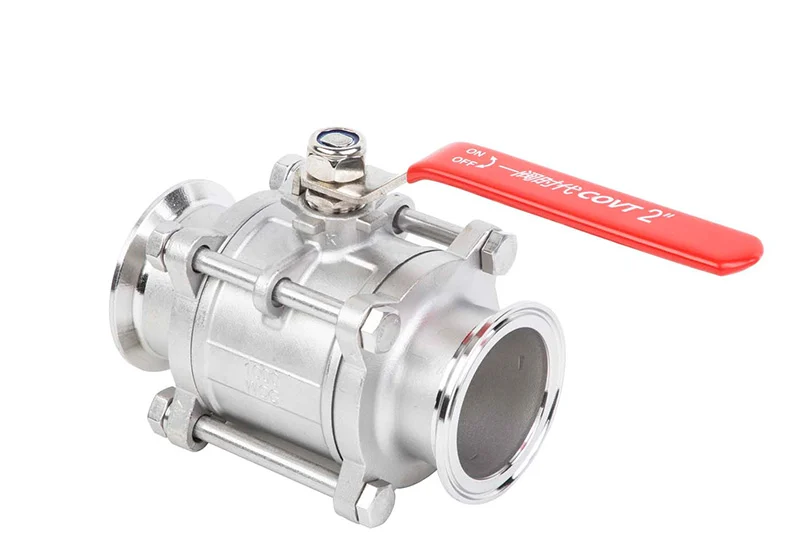
- Stainless Steel Ball Valves (Full Port, Three-Piece/Quick-Connect)
This is one of the most commonly used valves in liquid cooling secondary-side piping and cabinet branches.
Matching points:” Full-port design”offers extremely low flow resistance, suitable for high-flow coolant circulation; three-piece structure facilitates online disassembly and maintenance; clamp/quick-connect ends align with the quick-connect trend in liquid cooling piping. National standards and industry solutions explicitly recommend full-port three-piece welded or quick-connect ball valves for cabinet branches for isolation and maintenance.
Key specifications: SUS304 or 316L material recommended; EPDM or PTFE seals; suitable for water and glycol solutions. Some high-end liquid cooling scenarios (such as Siemens VAT41S series) also emphasize quick-swap clamp ball valves and media purity assurance.
- Stainless Steel Butterfly Valves (Sanitary/Three-Piece/Short-Neck)
Mainly used for CDU branches, ring network segmentation, and shutoff of larger-diameter piping.
Matching points: Short-neck structure saves installation space inside the CDU; sanitary three-piece design facilitates maintenance; reliable sealing and fast opening/closing. In industry specifications, sanitary three-piece welded or quick-connect butterfly valves are recommended for CDU supply/return ports and ring network segmentation valves below DN100.
Application locations: CDU inlet/outlet isolation, ring network segmentation, primary-side cooling tower piping, etc.
- Interlocking Ball Valves/Quick-Connect Couplings (with Self-Sealing Function)
Used for cabinet supply/return interfaces or nodes requiring frequent plugging and maintenance.
Matching points: Dual fool-proof and interlocking design ensures the valve cannot be opened when not mated, and must be closed before disconnection, achieving “drip-free” maintenance; no tools required for operation, improving data center maintenance safety.
Application scenario: Liquid cooling supply/return interfaces for high-performance computing (HPC) cabinets, cold plate branch quick-connect points.
- Automatic Air Vent Valves (Stainless Steel Body)
Auxiliary valves that must be installed at high points of the liquid cooling secondary-side network.
Matching points: Used to discharge air accumulated in the piping to ensure the coolant fills the circulation loop. Industry specifications require the air vent valve body to be SUS304 stainless steel with O-ring sealing, and PTFE tape must not be used.
Note: Confirm the compatibility of internal seals with glycol/deionized water.
- Electric Control Valves/Proportional Control Valves
Used where precise coolant flow control is required in CDUs or branch piping.
Matching points: Accept analog signals (such as 4-20mA or 0-10V) and link with DCIM/BMS systems to adjust flow according to load. Liquid cooling solutions require electric control valves to have precise percentage control characteristics, and some high-end applications also require intelligent position holding on power/signal loss to prevent the valve from mistakenly closing during a fault and causing equipment overheating.
Selection Pitfalls to Avoid
Material bottom line: Do not use brass, cast steel, or ordinary carbon steel valves in contact with coolant. SUS304 is recommended for liquid cooling systems; if chloride ion control in water quality is not strict or higher corrosion resistance is required, upgrading toSUS316L is recommended.
Sealing and connection: Do not use threaded connections. Liquid cooling piping should preferentially use welding, clamp, quick-connect couplings, or flanges. Threaded connections are not only prone to leakage, but PTFE tape debris can clog cold plate microchannels.
Degreasing treatment: Cold plate channels in liquid cooling are extremely fine; if oil or machining debris remains in valves before delivery, it will directly contaminate the entire loop. Confirm that valves have undergone degreasing and cleaning, and clarify the cleanliness grade.
If your product line includes the above categories and can provide SUS304/316L material, clamp/weld end connections, and degreasing certificates, then you have clear entry opportunities in liquid cooling secondary-side piping, CDU assembly, and cabinet quick-connect scenarios.