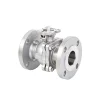
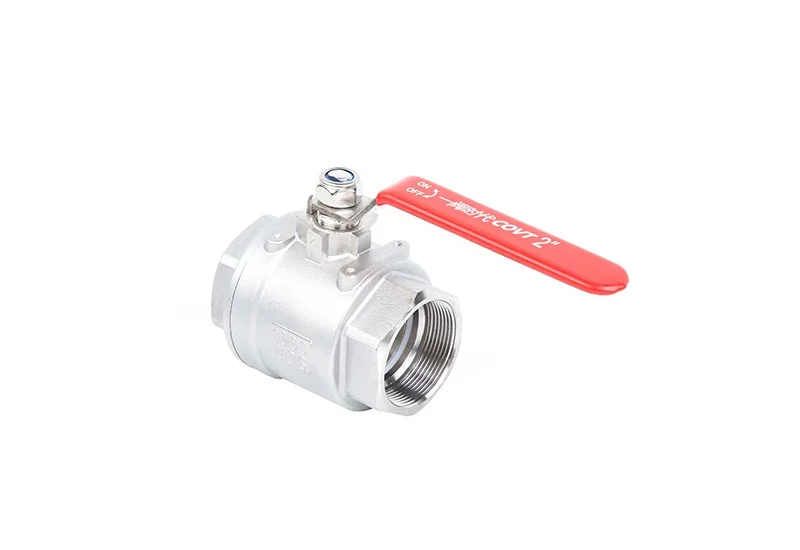
Threaded ball valves connect to pipelines through threaded interlocking, using the rotation of a perforated ball to achieve fluid flow flow and shuttle as core fittings. It is one of the most common types of valves in both industrial and civil sectors, mainly used to cut, distribute, and change the flow direction of media. Its core logic lies in balancing minimalist installation with ultimate sealing.
Advantages of threaded ball valves
- Low fluid resistance: Its resistance coefficient is equal to that of pipe sections of the same length, generating almost no additional resistance when the medium passes through, resulting in high efficiency.
- Easy operation and fast opening and closing: From fully open to fully closed, simply rotate the handle 90°, facilitating remote control or quick opening and closing.
- Reliable sealing performance: Under medium pressure, the ball slightly shifts and tightens downstream valve seats, achieving “the more you press, the tighter it gets.”
- Compact structure and easy installation: Small size and light weight, using threaded connections without flanges or numerous bolts, making installation and removal very simple, especially suitable for situations where installation space is required.
- Easy maintenance: Simple structure, sealing rings are usually movable, making removal and replacement easier.
Types of threaded ball valves
Threaded ball valves are generally divided into single-piece, two-piece, and three-piece types. The one-piece threaded ball valve has a small diameter, low cost, and is non-removable, suitable for simple working conditions with extremely tight spaces. Two-piece threaded ball valves are tightly locked by two valve body threads, resulting in high flow rates and are currently the mainstream choice in the market. The three-piece threaded ball valve consists of three parts. The middle valve body can be removed directly, allowing seals to be replaced without disassembling the pipelines at both ends, resulting in the longest service life.
Application range of threaded ball valves
In oil and natural gas, small chemical plants, and gas stations, threaded ball valves often serve as shut-off valves for end-pipeline lines. High-pressure stainless steel threaded ball valves can withstand pressures up to 500 Bar and are a staple in hydraulic systems and pneumatic control circuits. Municipal and civil construction are the largest stock markets for threaded ball valves. Mainly used for building water supply (below DN50), HVAC (HVAC), and home shut-off before and after urban gas meters. Threaded ball valves are also widely used in medical devices, packaging machinery, and laboratory analytical instruments. In pure water equipment, RO membrane reverse osmosis systems, and small delivery pipelines for various corrosive media, threaded ball valves play a precise role in fluid flow operation.